
Why Your Website Copy Should Be Written Before the Design (Not After)
The Wrong Way Round
Here’s a scene you’ve probably lived through, either as a business owner or a designer: the website is nearly done. The layout looks sharp, the colours are locked in, the client is thrilled. Then someone asks, almost as an afterthought, ‘so what’s going in this section?’ And suddenly everyone is scrambling to fill boxes with words that fit the space instead of words that actually say something.
I’ve seen this happen more times than I can count, and it’s rarely anyone’s fault exactly. It’s just how the process has traditionally worked. Design first, copy later, as if words are decoration you add once the real work is done. But words aren’t decoration. They’re the actual message. The layout is just the frame around it.
What Happens When Copy Comes Last
When writing gets squeezed into the final stretch of a project, a few predictable things happen, and none of them are good.
- The copy gets stretched or squished to fit. A headline that should be eight words becomes three because that’s all the space allows, and the meaning gets sanded down with it.
- Placeholder text becomes permanent. You know the ‘lorem ipsum’ trap. Sometimes that filler copy quietly turns into the real copy because nobody wants to redo the layout.
- The message gets vague. When you’re writing under pressure to fill a template, you default to safe, generic lines. ‘We’re passionate about delivering excellence.’ You’ve read that sentence a hundred times and it has told you nothing.
- The structure fights the story. Maybe your strongest selling point needs three paragraphs to land properly, but the design only has room for a single short blurb. Now your best argument is the one getting cut.
None of this is a design problem. It’s a sequencing problem. Design is brilliant at presenting a message clearly. It’s not very good at inventing one from scratch at the eleventh hour.
Flipping the Order
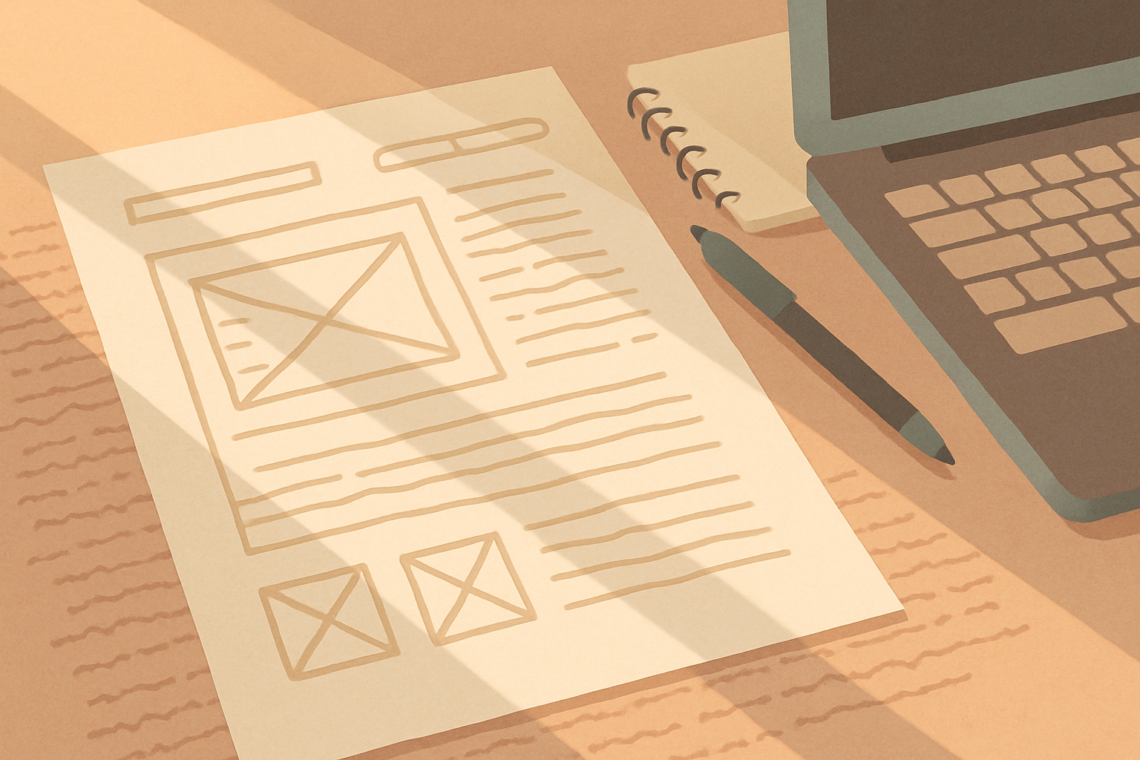
Here’s the alternative, and it’s simpler than it sounds: write the copy first, or at least alongside the early wireframes, and let the design respond to what the words need rather than the other way around.
When you do this, a few good things happen almost automatically.
The hierarchy becomes obvious
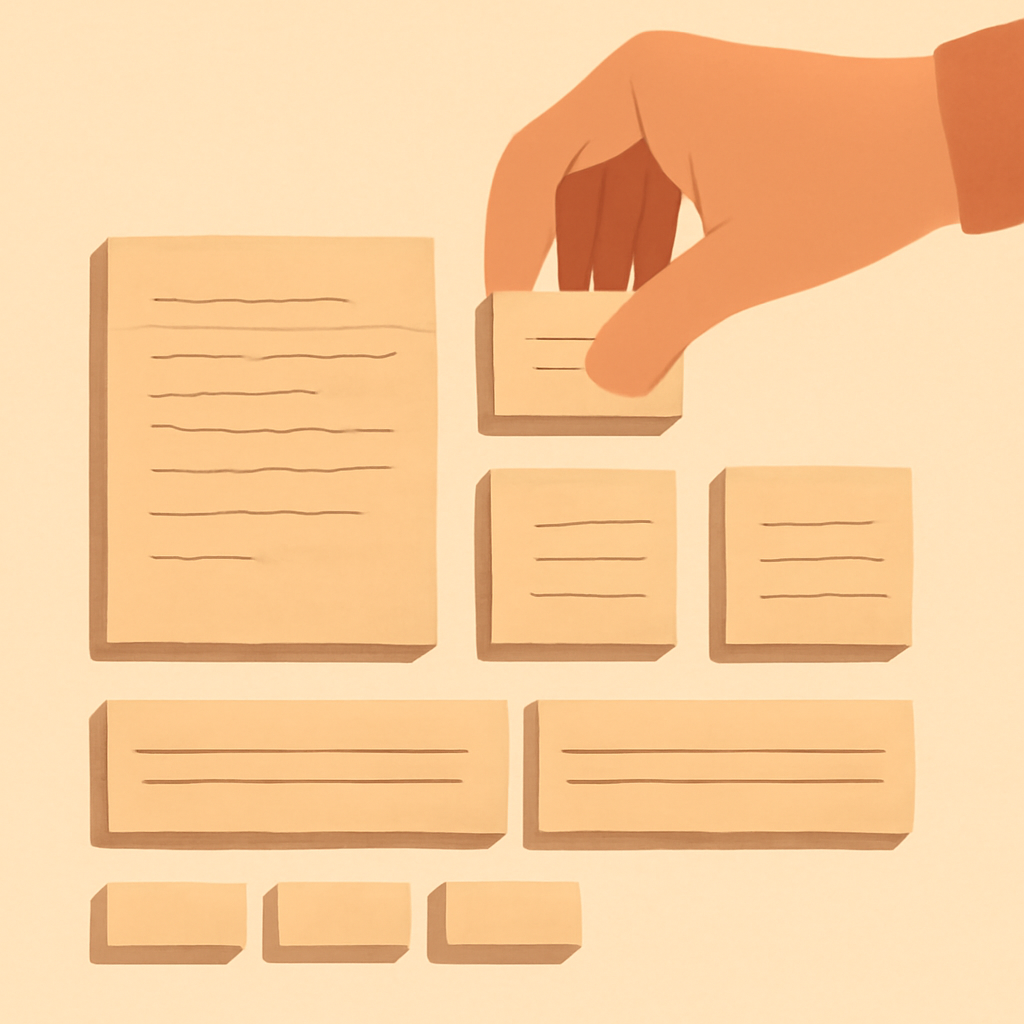
Once you’ve written your homepage copy, you can actually see what matters most. Maybe it’s a strong opening line about the transformation you offer. Maybe it’s a short list of services. Maybe it’s a single powerful testimonial. A designer working from real copy can build a layout that puts weight exactly where it belongs, instead of guessing.
Awkward gaps disappear
You know those sections where a site clearly needed ‘something’ so a stock quote or a vague tagline got dropped in? That almost never happens when copy comes first, because every section exists for a written reason, not a layout reason.
Revisions get cheaper
Editing a paragraph is quick. Rebuilding a template around a paragraph that no longer fits is not. When the words are settled early, the design work that follows tends to move faster and with fewer frustrating back-and-forths near the finish line.
How to Actually Do This
I’m not saying you need a finished, polished, publish-ready version of every single word before a designer touches anything. That’s not realistic and it’s not how good collaboration works anyway. What I am saying is this:
- Start with a content outline. Before any wireframes, sketch out what each page needs to say and in roughly what order. This doesn’t need to be pretty, it just needs to exist.
- Draft the core pages early. Homepage, services, about. These set the tone for everything else, so they deserve to be written with care rather than rushed at the end.
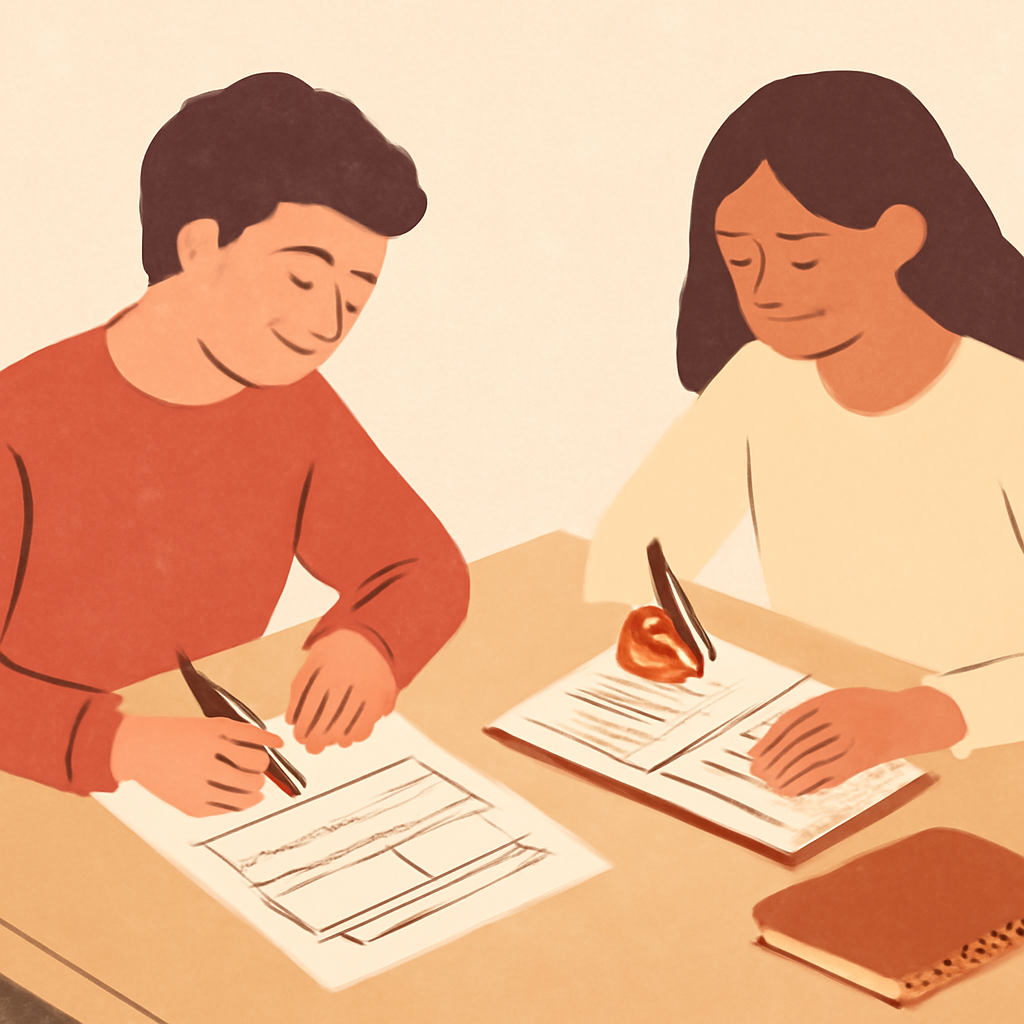
- Treat copy and design as a conversation, not a relay race. The best results I’ve seen come from writer and designer talking through the plan together, adjusting both the words and the layout as understanding deepens, rather than handing a finished file from one desk to the other.
- Protect your strongest lines. If a sentence is doing real work, don’t let it get trimmed down just because a box is too small. Change the box.
Why This Matters More Than It Seems
A website isn’t really a design project with some text in it. It’s a message with a shape. The shape should serve the message, and that’s much easier to arrange when the message exists before the shape gets locked in.
If you’re a small business owner working with a designer right now, it’s worth asking where copy sits in the timeline. If you’re a designer, it’s worth asking your clients for real content earlier than feels comfortable. And if you’re staring down a launch date with half-written pages, know that it’s not too late to pause, write properly, and let the design catch up to what you actually want to say.
Beautiful design gets people to look. Clear words get them to stay, understand, and act. Give the words their fair turn first, and the rest of the site tends to fall into place around them far more easily than you’d expect.